
goREAL 2027

Institutional Real Estate Roundtable

SHANGRI-LA TORONTO • May 13

A Curated Gathering of North America's Real Estate Investment Leaders

Institutional Perspectives.
Unfiltered Insights.

Institutional real estate decision-making is often shaped within specialized silos — LPs, GPs, developers, operators, and capital markets professionals each bring distinct perspectives, priorities, and assumptions to the market. While this specialization drives expertise, it can also create fragmented views of risk, value, timing, and the forces shaping long-term returns.

This roundtable brings together senior decision-makers from across the real estate investment lifecycle for candid, peer-level exchange. Through a combination of cohort-based and cross-functional discussions, participants gain direct insight into the priorities, constraints, and decision-making frameworks of other key players across the ecosystem — from capital allocation and investment strategy to development, operations, financing, and execution.

The programme is designed to broaden perspective rather than seek consensus. By challenging assumptions, comparing approaches, and examining the market through multiple lenses, participants develop a more integrated understanding of the drivers of risk and return, enabling greater clarity, conviction, and discipline in their investment decisions
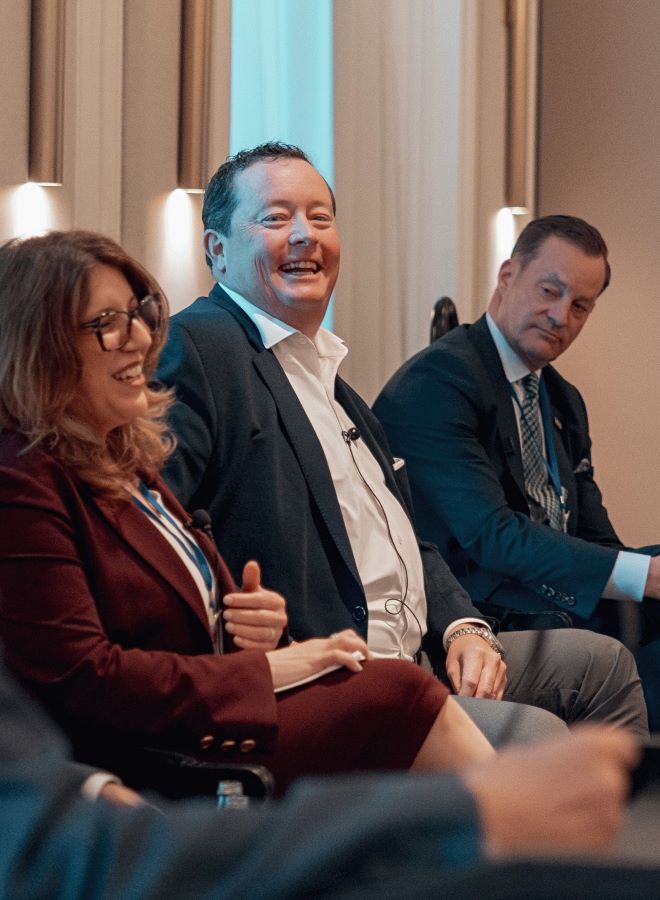
Bridging Perspectives Across the Real Estate Investment Ecosystem

The goREAL Roundtable convenes 35 senior leaders from across real estate private markets in a closed-door, invitation-only setting. The group spans institutional investors, asset managers, developers, operators, lenders, and capital providers, creating a focused environment for peer-level exchange on investment decisions, portfolio strategy, capital deployment, and market dynamics.

The programme alternates between focused cohort sessions and mixed-group roundtables, allowing perspectives to be explored within peer groups and then tested across the wider ecosystem. Institutional LPs are fully integrated into the mixed sessions, bringing a consistent capital-allocation perspective into discussions with investment and asset management platforms, developers, and financing participants.

Key participant groups include:

— Institutional Capital & Portfolio Strategy
— Investment, Asset Management & GP Platforms
— Development, Financing & Capital Markets

The group is carefully curated across all three cohorts to balance seniority and perspective while maintaining a focused, high-quality discussion.

Participation is strictly by invitation only. Limited capacity.

Integrated Intelligence Sessions

*A preliminary agenda will be shared with all invited groups. Discussions are held under strict confidentiality, with no press, recording, or external attribution.

A full-day program for senior investors, combining interactive roundtables, plenary discussions, expert briefings, complemented by curated connections to industry leaders. Discussions are framed around six overarching themes shaping today’s institutional real estate landscape, from structural shifts and capital allocation to risk management and strategic positioning.

This outline is indicative; the detailed agenda will be refined in consultation with participants and moderators. Participants help shape session topics, while moderators ensure discussions remain focused and actionable.

01. Assessing Structural Shifts in the Real Estate Investment Landscape

*Cohort Session

This session explores how different parts of the real estate investment ecosystem are positioning themselves following the post-rate shock adjustment period. Participants assess current sentiment, allocation priorities, market constraints, and emerging areas of opportunity across capital, lending, and operating strategies.

Group 1: Institutional Capital & Portfolio Strategy

This roundtable brings together institutional investors and strategic capital partners to examine how higher rates, valuation resets, and shifting liquidity are reshaping real estate allocation frameworks. The discussion will focus on portfolio positioning, relative value, capital deployment, and where conviction is building or fading across geographies, sectors, and competing asset classes.

  • How has your conviction in real estate evolved relative to other major asset classes, particularly private credit, infrastructure, and fixed income, following the recent repricing?
  • How are you reassessing portfolio construction, including NAV stability, risk-adjusted returns, and the balance between real estate and competing opportunities?
  • Where are you seeing the strongest conviction today across geographies and sectors, and how are shifting capital flows influencing allocation decisions?
  • How are liquidity considerations, pacing requirements, and exit visibility shaping deployment timelines and commitment strategies?
  • Looking ahead, what is the biggest constraint — or catalyst — for increasing real estate allocations: pricing, liquidity, conviction, portfolio needs, or visibility on exits?

Group 2: Investment, Asset Management & GP Platforms

This session examines how investment and asset management strategies are adapting to the structural shifts following the post-rate shock adjustment. The discussion focuses on current investment posture, deployment priorities, underwriting discipline, and where conviction is emerging as valuations, financing conditions, and exit expectations continue to reset.

  • How would you characterize your current investment posture — defensive, opportunistic, or selectively scaling risk — and what is driving that stance?
  • How are changing valuations, financing conditions, and bid-ask gaps affecting underwriting and transaction activity?
  • Where are you seeing the strongest conviction today across sectors, geographies, and strategies — and where does uncertainty remain highest?
  • How are portfolio management and deployment strategies adapting to longer hold periods, slower exits, and evolving investor expectations?
  • Looking ahead, what structural shift in the market is most likely to shape investment strategy over the next 12–24 months?

Group 3: Development, Financing & Capital Markets

This session examines how developers, lenders, and capital providers are navigating the changing economics of real estate development and financing. The discussion focuses on project viability, capital availability, refinancing, and the evolving balance between new development, adaptive reuse, and recapitalisation as construction costs, financing conditions, and return expectations continue to reset.

  • How would you characterize the current development and financing environment, and what has changed most materially in the economics of bringing projects forward?
  • How are developers and lenders adjusting underwriting assumptions around costs, leverage, interest rates, contingencies, and exit values?
  • To what extent are financing constraints reshaping development pipelines — and where are projects being delayed, redesigned, or reconsidered?
  • How are lender behaviour and the growing role of private credit changing financing structures, negotiations, and approaches to refinancing or recapitalisation?
  • Looking ahead, where do you see the greatest potential for new development, adaptive reuse, or recapitalisation — and what will determine whether capital actually follows?

02. Capital Stack Dynamics & Market Reality Check

*Mixed Session

This session brings together institutional investors, GPs, asset managers, and developers to examine how capital is being allocated across equity, credit, and hybrid structures in a market still adjusting to higher rates and uneven liquidity. The focus is on how capital stack decisions are being made in practice, where risk is being re-priced most aggressively, and where inefficiencies, mispricings, and structural gaps continue to shape investment and development outcomes.

  • How are you currently allocating across equity, credit, and hybrid strategies, and what is driving those capital allocation decisions today?
  • How are prevailing liquidity conditions influencing both the availability and pricing of capital across the stack?
  • Are hybrid capital structures becoming a permanent feature of the market, or are they primarily a cyclical response to current dislocation?
  • In which parts of the market do you believe pricing discovery is largely complete versus still incomplete or lagging fundamentals?
  • Where do you see the most persistent mispricing between perceived risk and actual asset or portfolio performance today?
  • How are different parts of the capital stack competing — or collaborating — to fill gaps left by traditional bank and institutional lending capacity?

03. The New Sources of Value and Risk in Real-World Execution

*Cohort Session

The session focuses on how participants are reassessing assumptions after cross-sector discussion and market comparison. Conversations center on execution risk, capital constraints, portfolio resilience, and the strategic adjustments now required going forward.

Group 1: Institutional Capital & Portfolio Strategy

Building on the cross-sector discussion, this session turns back to the institutional capital perspective to examine what current market conditions mean in practice once capital is deployed. The focus shifts from broad allocation views to realized outcomes — where value is being created, where risk is materializing, and how liquidity, execution, and portfolio resilience are influencing decisions across institutional portfolios.

  • Having heard perspectives from across the ecosystem, where are you seeing the strongest evidence of value creation in portfolios today — and what is actually driving it?
  • Where is risk proving most difficult to anticipate or manage in practice: acquisition, asset-level execution, financing, or exit?
  • How are liquidity constraints and cross-asset competition changing decisions around deployment pace, selectivity, concentration, and portfolio rebalancing?
  • Where are sector or geographic differences translating into meaningful differences in realized performance — rather than simply different underwriting assumptions?
  • What has this cycle changed most fundamentally about how institutional investors should think about resilience, value creation, and risk going forward?

Group 2: Investment, Asset Management & GP Platforms

Building on the cross-sector discussion, this session examines how investment and asset management approaches are evolving as value creation increasingly depends on real-world execution. The focus is on how managers are adapting underwriting, asset management, hold strategies, and portfolio decisions as performance dispersion widens and exit visibility remains uneven.

  • Having heard perspectives from across the ecosystem, what has most changed in your view of where value is actually created — and where risk is materializing?
  • How is greater execution risk changing underwriting, investment sizing, and the assumptions you make at entry?
  • Where are you seeing the greatest divergence in performance, and what separates assets or strategies that are outperforming from those under pressure?
  • How are uncertain exits and refinancing conditions changing hold periods, asset management intensity, and decisions around selling or extending?
  • What is the most important adjustment investment and asset management platforms need to make to create value and remain resilient through the next phase of the cycle?

Group 3: Development, Financing & Capital Markets

Building on the cross-sector discussion, this session examines how development and financing decisions are changing as execution risk becomes a more important determinant of project viability and returns. The focus is on what is proving deliverable in practice — from project structuring and design to construction, financing, and capital deployment — and how developers and financing partners are adapting to greater cost, timing, and delivery uncertainty.

  • Having heard perspectives from across the ecosystem, what has most changed in your view of development and financing risk?
  • How is greater execution risk influencing project structuring, design, underwriting, and financing decisions from the outset?
  • Where are you seeing the greatest pressure on viability today — cost, financing, timing, or delivery certainty — and how are projects adapting?
  • What are construction and buildability constraints changing about what actually gets developed, and where is adaptive reuse proving more viable than new development?
  • Looking ahead, what changes in development, financing, or delivery models will be most important to maintaining project viability through the next phase of the cycle?

04. Liquidity, Exit Strategies & Valuation Dynamics

*Mixed Session

This session examines how investors, managers, and capital providers are navigating a market where valuation expectations, financing conditions, and transaction liquidity remain out of sync. The discussion focuses on price discovery, exit timing, buyer and seller expectations, and the factors determining when assets can realistically move from marked value to executable transactions.

  • How would you characterize the current state of liquidity and price discovery across real estate markets, and where are the biggest disconnects between stated and executable values?
  • How are bid-ask gaps, financing costs, and limited transaction volumes influencing decisions to sell, hold, refinance, or recapitalise?
  • What is driving the return of liquidity in the markets today — improving financing conditions, greater pricing clarity, distressed supply, or renewed buyer conviction?
  • How are expectations around exit timing and achievable pricing changing portfolio strategies and asset-level decisions?
  • Looking ahead, what will be the key catalyst for a more sustainable recovery in transaction volumes and valuations?

05. Segment-Specific Strategic Recalibration

*Cohort Session

This session focuses on how investment strategies, operating models, and capital structures must evolve in a structurally different market environment. Participants define what positioning, capabilities, and capital discipline will matter most in the next cycle.

Group 1: Institutional Capital & Portfolio Strategy

This session focuses on how institutional investors are recalibrating portfolio strategy for a structurally different market environment. With higher rates, tighter liquidity, and greater performance dispersion challenging traditional allocation assumptions, the discussion examines how institutions are evolving portfolio construction, manager relationships, governance, and capital deployment — and where they are prepared to take or reduce illiquidity risk.

  • What changes to portfolio construction are becoming necessary as institutions adapt to a higher-rate, lower-liquidity environment?
  • How is the role of real estate evolving within broader private market portfolios, and where does it still offer compelling risk-adjusted value?
  • Where is illiquidity still worth paying for, and where are institutions becoming more selective or demanding greater flexibility?
  • How are manager selection, governance, co-investment, and alignment expectations evolving as performance dispersion increases?
  • Looking ahead, what will define a more resilient institutional allocation strategy in the next cycle — and what established practices are most likely to change?

Group 2: Investment, Asset Management & GP Platforms

This session examines how investment and asset management platforms are recalibrating strategy, operating models, and value-creation approaches for a more selective capital environment and structurally different return dynamics. As performance dispersion widens and traditional return drivers become less reliable, the discussion focuses on where durable competitive advantage will come from — across sector positioning, operational capabilities, portfolio management, and alignment with evolving investor expectations.

  • What capabilities will most clearly differentiate investment and asset management platforms that outperform through the next cycle?
  • How are shifts in sector attractiveness changing long-term investment strategy and where platforms choose to build or deploy expertise?
  • Where is durable value creation increasingly coming from — operational execution, asset management, financial structuring, or the combination of these?
  • How are greater selectivity from investors and changing expectations around alignment, track record, and deployment influencing platform strategy?
  • Looking ahead, what strategic or organizational changes will be most important for platforms seeking to remain competitive through the next cycle?

Group 3: Development, Financing & Capital Markets

This session examines how development and financing strategies are being recalibrated for a structurally more complex and execution-constrained market. With cost, timing, financing, and delivery certainty less predictable than in previous cycles, the discussion focuses on how developers and capital providers are redefining project viability, risk appetite, pipeline selection, and the models required to deliver successfully through the next cycle.

  • What has changed most fundamentally in how you assess development risk, feasibility, and the decision to proceed with a project?
  • How are greater uncertainty around cost, timing, financing, and delivery changing project selection and risk appetite?
  • Where is the balance between ambition and deliverability shifting, and what does that mean for how projects are designed, structured, and capitalised?
  • How are developers and financing partners adapting their operating and capital models to make delivery more resilient to persistent uncertainty?
  • Looking ahead, how will the relative attractiveness of new development, redevelopment, and adaptive reuse evolve — and what will determine where capital ultimately flows?

06: Leading Through the Next Market Inflection

*Mixed Session

This mixed session brings together perspectives from across the real estate investment ecosystem to explore what the market may be underestimating, where structural change is creating dislocation, and what could shape the next cycle. The discussion moves beyond current positioning to examine emerging risks, overlooked opportunities, and the capabilities required to navigate an increasingly complex market.

  • What is the market still materially underestimating today — whether in terms of risk, opportunity, or structural change?
  • Where are persistent inefficiencies or disconnects preventing capital from being allocated or deployed effectively?
  • Which emerging risks or shifts could most challenge current assumptions across investment, development, financing, and asset management?
  • Where do you see meaningful opportunities that the market is consistently overlooking, and why are they being missed?
  • Looking ahead, what capabilities, behaviours, or sources of dislocation will most clearly differentiate the platforms and strategies that outperform in the next cycle?

Strategic Value & Outcomes

Participants emerge with clearer strategic insight and a holistic view of the market, informed by high-quality, peer-level exchange. The roundtable creates a focused environment for dialogue across capital allocators, operators, and financing platforms, enabling attendees to explore synergies, identify opportunities, and strengthen relationships that endure beyond the session.

What You’ll Gain

— Sharper clarity on allocation, portfolio positioning, and capital deployment
— Senior-level exchange across the full real estate investment lifecycle
— Actionable insights to guide investment and operational decisions
— Peer relationships built for long-term relevance, trust, and collaboration

Program FAQs

No invitation. Can we still participate?

We convene a limited number of curated groups for each edition, while remaining open to expressions of interest from qualified organizations. If you would like to be considered for participation, please submit your inquiry via our support page. Participation is by invitation only, and our team will review all submissions and follow up where appropriate.

What is the required level of preparation?

Preparation is intentionally light. Each session is guided by experienced facilitators to keep discussions focused and productive. In the lead-up to the program, we work with participants to capture priority topics and questions, which are reflected in the agenda where relevant. On site, all participants are active contributors and encouraged to raise the issues they consider most material.

What is the structure of the program?

The program begins at 8:00 AM with a networking breakfast, followed by the main program from 9:00 AM to 3:30 PM, including six core roundtable sessions (cohorts and mixed groups), where participants rotate across tables to ensure exposure to a range of perspectives and consistently fresh insights. 

These are complemented by mid-day and closing plenaries (group discussion/Q&A), rapid reporting segments and select presentations on topics of relevance, ensuring a well-paced format that combines depth, exchange, and connectivity. The agenda also features structured networking moments throughout the day, including coffee breaks, a working lunch, and a closing reception. 

Invited participants receive the full agenda in advance, along with a secure access link and password to complete their online registration.

Is more than one participant allowed?

Participation is typically limited to one delegate per organization. In select cases, additional participants may be considered if they contribute relevant expertise aligned with the cohort groups and add meaningful depth to the discussions. Alternatively, two participants may share attendance across the program (e.g. morning and afternoon sessions), provided they align with the same cohort group.

Are there speaker opportunities?

The program is primarily structured around moderated roundtable discussions. However, we reserve a limited number of short presentation slots (approximately 10 minutes) for partner organizations to share highly relevant insights with the audience.

If you would like to explore a speaking or presentation opportunity, please contact us via our contact page.

Can I moderate a session?

Yes, participants are welcome and encouraged to facilitate one of the core roundtable sessions (35 minutes). If you are interested, please indicate this in the registration form. Our team will coordinate with moderators on session topics and key questions in advance.

Sessions are conversational and discussion-led in format. Moderators are supported with guidance to ensure a structured flow, balanced participation, and a high-quality exchange among peers.

Registration

Registration is limited to one participant per group. The information provided in this form will be used solely for event registration and related communications.

*Cancellations made more than 60 days prior to the event are fully refundable. Cancellations between 30 and 60 days prior are eligible for a 50% refund. Cancellations within 30 days of the event are non-refundable. Delegate passes are transferable.