
privCAP 2027

Closed-Door Institutional Roundtable

SHANGRI-LA TORONTO • November 4

A Curated Gathering of North America's Private Equity Investment Leaders

Institutional Perspectives.
Unfiltered Insights.

Private equity is entering a period in which established assumptions around valuation, liquidity, fundraising, portfolio construction, and value creation are being tested. A more selective capital environment, pressure for distributions, evolving exit markets, and heightened expectations around underwriting and value creation are reshaping how investors assess opportunities and manage portfolios.

This roundtable brings together senior decision-makers from across the private equity ecosystem for candid, peer-level dialogue on the forces reshaping the asset class. Through focused cohort discussions and cross-market sessions, participants gain direct insight into how different market participants are approaching capital allocation, investment strategy, portfolio construction, value creation, fundraising, exits, and liquidity — and where perspectives converge or diverge.

The program is designed not to build consensus, but to broaden perspective. By challenging assumptions, comparing approaches, and examining the market through multiple lenses, participants develop a more integrated understanding of where private equity is heading, where risks and opportunities are emerging, and how investment leaders can position for the next phase of the market.
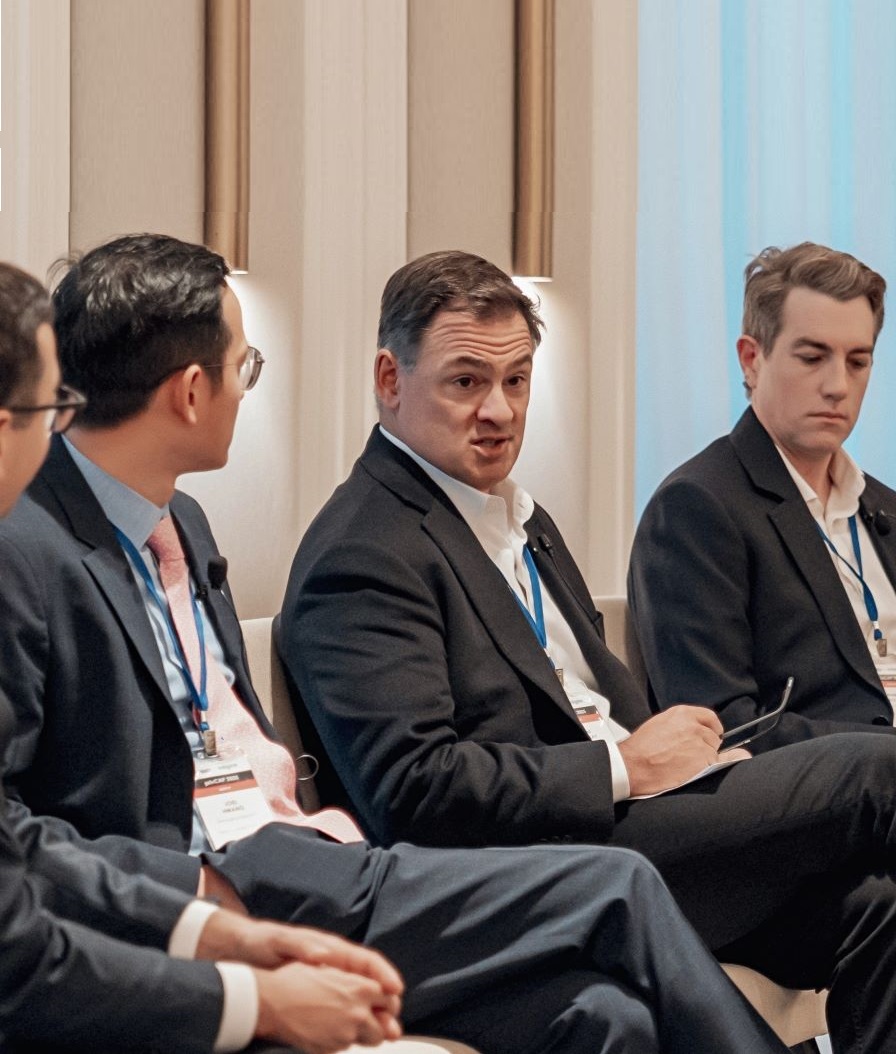
Rethinking the Private Equity Model

The privCAP Roundtable brings together 30 senior leaders from across North American private equity in a closed-door, invitation-only setting. The group brings together institutional capital allocators, leading private equity managers, and selected participants active in the secondary and GP-led markets, bringing together distinct perspectives across the private equity investment cycle.

Participants are active contributors throughout. Discussions alternate between focused cohort sessions and mixed-group roundtables, bringing different perspectives together while maintaining candid, peer-level dialogue. The format is designed to challenge assumptions, surface areas of alignment and divergence, and encourage direct exchange among senior market participants.

Key participant groups include:

— Institutional Allocators
— Buyout & Growth Managers
— Secondary & GP-led Investors

Participants are carefully curated to ensure senior leadership with direct investment authority and alignment with long-term institutional mandates.

Participation is strictly by invitation only. Limited capacity.

Integrated Intelligence Sessions

*A preliminary agenda will be shared with all invited groups. Discussions are held under strict confidentiality, with no press, recording, or external attribution.

A full-day program designed for senior private equity investment leaders, combining interactive roundtables, plenary discussions, and strategic briefings — complemented by curated connections with peers across the private equity ecosystem. Discussions are structured around the key themes shaping today’s market, from capital allocation and investment strategy to valuation, value creation, fundraising, exits, and liquidity.

This framework is indicative. A detailed agenda will be refined in consultation with participants and facilitators. Participants contribute to shaping session priorities, while facilitators ensure discussions remain rigorous, relevant, and decision-oriented.

01. Capital Allocation & Portfolio Strategy

*Cohort Session

Private equity investors are reassessing how capital should be allocated across strategies, managers, sectors, and vintages — balancing conviction with diversification, pacing, and liquidity. For GPs, the challenge is equally strategic: where to focus deployment, how to differentiate, and where to maintain discipline when attractive opportunities are unevenly distributed. The discussion explores how leading participants are setting priorities, making trade-offs, and positioning portfolios for the next phase of the market.

Institutional Allocators (LPs)

LPs are balancing long-term commitments to private equity with greater scrutiny around pacing, liquidity, concentration, and portfolio construction. The discussion focuses on where conviction remains strongest, how allocation frameworks are evolving, and what increasingly determines the decision with greater visibility than traditional primary investing. The discussion explores where opportunity is emerging across the secondary market and how investors are balancing portfolio construction, asset quality, to commit, maintain, or reallocate capital.

  • How are you thinking about the appropriate role and size of private equity within the broader portfolio?
  • Where are you increasing conviction — by strategy, manager type, sector, geography, or vintage?
  • How are pacing, distributions, and liquidity considerations influencing new commitments?
  • What has changed most in how you evaluate managers and assess future allocation opportunities?
  • Where are you willing to concentrate capital, and where is diversification becoming more important?

Buyout & Growth Managers

For GPs, allocation decisions ultimately translate into where to deploy scarce investment capacity and where to remain disciplined. The discussion examines how managers are defining their opportunity sets, differentiating their strategies, and deciding where conviction is sufficient to deploy capital.

  • Where are you seeing the strongest risk-adjusted opportunities across your investment universe?
  • How are you balancing conviction and selectivity against pressure to deploy capital?
  • Are buyout and growth strategies converging in their opportunity sets, or becoming more differentiated?
  • How are sector specialization, scale, and competitive positioning influencing where you deploy?
  • What are you deliberately avoiding today — and what would need to change for that to shift?

Secondary & GP-led Investors

Secondary and GP-led investors approach allocation through a different lens: existing assets, established portfolios, pricing, and the potential to acquire exposure with greater visibility than traditional primary investing. The discussion explores where opportunity is emerging across the secondary market and how investors are balancing portfolio construction, asset quality, pricing, and transaction structure.

  • Where are you seeing the most attractive opportunities across LP-led and GP-led transactions?
  • How are you balancing portfolio diversification against concentration in high-conviction assets?
  • What matters most today when underwriting secondary exposure: price, asset quality, manager quality, or transaction structure?
  • How are changing liquidity needs affecting the supply and quality of secondary opportunities?
  • As secondaries become a more established component of PE portfolios, how should investors think about their strategic role alongside primary commitments?

02. Origination, Valuation & Investment Selection

*Mixed Session

Investment opportunities are increasingly differentiated not only by access, but by the ability to assess quality, price risk appropriately, and maintain discipline through competitive processes. As valuation expectations, deal structures, and sources of opportunity continue to evolve, investors are reassessing what constitutes an attractive entry point and where conviction is sufficient to act. This discussion brings together different perspectives on sourcing, underwriting, valuation, and investment selection across the PE market.

  • How are changing valuation expectations influencing investment selection and willingness to deploy?
  • What distinguishes genuine investment conviction from simply winning a competitive process?
  • How are investors adapting their approach to sourcing as traditional deal channels become more competitive?
  • Where are the greatest disconnects today between seller expectations, GP underwriting, and investor return requirements?
  • How are different participants assessing the trade-off between entry price, asset quality, growth potential, and downside protection?
  • Are current market conditions creating better opportunities through greater selectivity, or simply reducing the volume of investable opportunities?

03. Value Creation, Performance & Return Drivers

*Cohort Session

Private equity investors are reassessing how capital should be allocated across strategies, managers, sectors, and vintages — balancing conviction with diversification, pacing, and liquidity. For GPs, the challenge is equally strategic: where to focus deployment, how to differentiate, and where to maintain discipline when attractive opportunities are unevenly distributed. The discussion explores how leading participants are setting priorities, making trade-offs, and positioning portfolios for the next phase of the market.

Institutional Allocators (LPs)

LPs increasingly need to look beyond headline fund performance to understand the underlying sources and durability of returns. This discussion focuses on how allocators assess value creation across managers, distinguish repeatable capabilities from market-driven performance, and evaluate whether portfolio outcomes support continued conviction.

  • How are you assessing the underlying drivers of PE performance across managers and vintages?
  • Which sources of value creation are proving most durable in the current environment?
  • How much weight do you place on operational improvement versus multiple expansion, leverage, and broader market effects?
  • How are you distinguishing repeatable manager skill from favorable market conditions?
  • What evidence gives you confidence that a manager can sustain performance through the next cycle?

Buyout & Growth Managers

The sources of PE returns are under greater scrutiny as higher entry valuations, more expensive financing, and longer holding periods change the investment equation. The discussion examines how managers are creating value within portfolio companies, where differentiation is emerging, and how investment teams are adapting their approach to generate attractive outcomes.

  • Where do you see the greatest opportunities for value creation in the current environment?
  • How have value creation plans changed as leverage and multiple expansion become less dependable?
  • What role are operational improvement, organic growth, pricing, add-ons, and technology playing in current portfolios?
  • How are you measuring and managing performance at the portfolio-company level?
  • Are the capabilities required to generate returns changing — and what does that mean for the PE operating model?

Secondary & GP-led Investors

Secondary and GP-led investors evaluate performance through a different lens, often with greater visibility into established assets, operating performance, and the remaining value-creation opportunity. The discussion examines how investors assess the quality and durability of value a high-quality asset with further value-creation potential from one or indicators provide the greatest conviction when evaluating mature creation when underwriting existing portfolios and continuation opportunities.

  • What distinguishes a high-quality asset with further value-creation potential from one that has already reached its peak?
  • How do you assess the sustainability of a GP’s value-creation thesis when underwriting an existing investment?
  • Which performance metrics or indicators provide the greatest conviction when evaluating mature portfolio companies?
  • How are changing holding periods affecting the opportunity to create value in existing assets?
  • When does extending ownership create meaningful additional value — and when is it simply delaying realization?

04. Manager Strategy, Economics & Alignment

*Mixed Session

The relationship between LPs, GPs, and the broader PE ecosystem is evolving as expectations around performance, alignment, economics, liquidity, and accountability become more demanding. At the same time, managers are adapting their business models and investors are becoming more selective in how they assess long-term partnerships. This discussion explores what effective alignment means today and how the relationship between capital providers, managers, and other market participants is changing.

  • What does genuine alignment between LPs and GPs look like in the current market?
  • How are investors evaluating performance beyond headline IRR and MOIC?
  • Are expectations around fees, economics, governance, and transparency changing in meaningful ways?
  • What differentiates a durable LP–GP relationship from a transactional one?
  • How are changing ownership structures, succession considerations, and the institutionalization of PE firms affecting alignment?
  • Where are expectations between LPs and GPs currently most misaligned — and what would improve them?

05. Exit Planning, Liquidity & Capital Recycling

*Cohort Session

Exit markets are increasingly shaping investment decisions well before a portfolio company reaches the point of sale. Longer holding periods, evolving buyer pools, changing valuation expectations, and growing use of secondary and GP-led transactions are reshaping how investors think about realization and liquidity. The discussion examines how GPs and LPs are adapting exit planning, while considering how new liquidity mechanisms are changing the traditional PE lifecycle.

Institutional Allocators

For LPs, liquidity and distributions have become increasingly important to portfolio construction, pacing, and the ability to meet future commitments. The discussion focuses on how allocators are managing the tension between waiting for value-maximizing exits and responding to liquidity needs, while assessing the growing role of secondary markets.

  • How are changing distribution patterns affecting your pacing, portfolio construction, and commitment decisions?
  • How do you balance the desire for liquidity with the potential value of holding assets longer?
  • When does selling an existing fund or position in the secondary market make strategic sense?
  • How are you assessing GP-led transactions and continuation vehicles as an LP?
  • What would need to change for distributions and liquidity to normalize across the PE market?

Buyout & Growth Managers

GPs are navigating a more complex exit environment in which traditional buyers, financing conditions, valuations, and timing can all influence realization outcomes. The discussion explores how managers are planning exits, determining when to hold or sell, and considering alternative liquidity solutions when conventional exit routes are less attractive.

  • How are you determining whether to exit an asset now or hold it for additional value creation?
  • How have buyer markets, financing conditions, and valuation expectations changed your exit planning?
  • Which exit routes are becoming more attractive — strategic sales, sponsors, IPOs, or secondary solutions?
  • When does a continuation vehicle create genuine value for investors and the portfolio company?
  • How are longer holding periods changing the way you manage portfolio companies and communicate with LPs?

Secondary & GP-led Investors

Secondary and GP-led investors sit directly at the intersection of liquidity, valuation, and portfolio realization. Their perspective provides insight into how pricing is developing, where transaction opportunities are emerging, and how increasingly sophisticated liquidity structures are changing the way PE exposure can be transferred or extended.

  • Where are you seeing the strongest opportunities across LP-led and GP-led transactions?
  • How are pricing expectations and bid–ask dynamics evolving across the secondary market?
  • What makes a continuation vehicle compelling to new investors, existing LPs, and GPs?
  • How are transaction structures evolving to balance liquidity, alignment, and future upside?
  • Is the growing secondary market fundamentally changing how investors should think about PE liquidity and holding periods?

06: Next Cycle & Evolution of the PE Model

*Mixed Session

Private equity is entering a period in which many established assumptions around fundraising, investment horizons, value creation, exits, liquidity, and manager economics are being reassessed. The question is not simply how the market recovers, but which changes are cyclical and which represent a more lasting evolution of the asset class. The final discussion brings together all three perspectives to consider what the next generation of private equity may look like.

  • Which changes in the PE market are cyclical, and which are likely to become structural?
  • Will longer holding periods and alternative liquidity mechanisms become a permanent feature of the PE model?
  • How might LP portfolio construction and commitment behavior evolve over the next 3–5 years?
  • What will differentiate successful PE managers as competition for institutional capital intensifies?
  • How could the growing secondary and GP-led market change the traditional relationship between ownership, liquidity, and investment horizons?
  • Looking ahead, what does the PE model need to do differently to deliver attractive risk-adjusted returns and remain compelling to institutional capital?

Strategic Value & Outcomes

Participants leave the roundtable with a broader perspective on the forces shaping private equity and greater clarity on how peers are navigating capital allocation, investment strategy, portfolio construction, value creation, and liquidity.

This is a rare, off-the-record setting for candid exchange among senior investors and market participants, designed to challenge assumptions, strengthen decision-making, and build trusted relationships across the private equity community.

What You’ll Gain

— Broader perspective on private equity allocation, strategy, and portfolio construction
— Sharper insight into valuations, liquidity, and the evolving exit environment
— Practical perspectives on investment discipline, value creation, and positioning
— Trusted relationships with senior investors and market participants built on discretion and shared expertise

Program FAQs

No invitation. Can we still participate?

We convene a limited number of curated groups for each edition, while remaining open to expressions of interest from qualified organizations. If you would like to be considered for participation, please submit your inquiry via our support page. Participation is by invitation only, and our team will review all submissions and follow up where appropriate.

What is the required level of preparation?

Preparation is intentionally light. Each session is guided by experienced facilitators to keep discussions focused and productive. In the lead-up to the program, we work with participants to capture priority topics and questions, which are reflected in the agenda where relevant. On site, all participants are active contributors and encouraged to raise the issues they consider most material.

What is the structure of the program?

The program begins at 8:00 AM with a networking breakfast, followed by the main program from 9:00 AM to 3:30 PM, including six core roundtable sessions (cohorts and mixed groups), where participants rotate across tables to ensure exposure to a range of perspectives and consistently fresh insights. 

These are complemented by mid-day and closing plenaries (group discussion/Q&A), rapid reporting segments and select presentations on topics of relevance, ensuring a well-paced format that combines depth, exchange, and connectivity. The agenda also features structured networking moments throughout the day, including coffee breaks, a working lunch, and a closing reception. 

Invited participants receive the full agenda in advance, along with a secure access link and password to complete their online registration.

Is more than one participant allowed?

Participation is typically limited to one delegate per organization. In select cases, additional participants may be considered if they contribute relevant expertise aligned with the cohort groups and add meaningful depth to the discussions. Alternatively, two participants may share attendance across the program (e.g. morning and afternoon sessions), provided they align with the same cohort group.

Are there speaker opportunities?

The program is primarily structured around moderated roundtable discussions. However, we reserve a limited number of short presentation slots (approximately 10 minutes) for partner organizations to share highly relevant insights with the audience.

If you would like to explore a speaking or presentation opportunity, please contact us via our contact page.

Can I moderate a session?

Yes, participants are welcome and encouraged to facilitate one of the core roundtable sessions (35 minutes). If you are interested, please indicate this in the registration form. Our team will coordinate with moderators on session topics and key questions in advance.

Sessions are conversational and discussion-led in format. Moderators are supported with guidance to ensure a structured flow, balanced participation, and a high-quality exchange among peers.

Registration

The participation fee is €750. Registration is limited to one participant per group. The information provided in this form will be used solely for event registration and related communications.

*Cancellations made more than 60 days prior to the event are fully refundable. Cancellations between 30 and 60 days prior are eligible for a 50% refund. Cancellations within 30 days of the event are non-refundable. Delegate passes are transferable.